



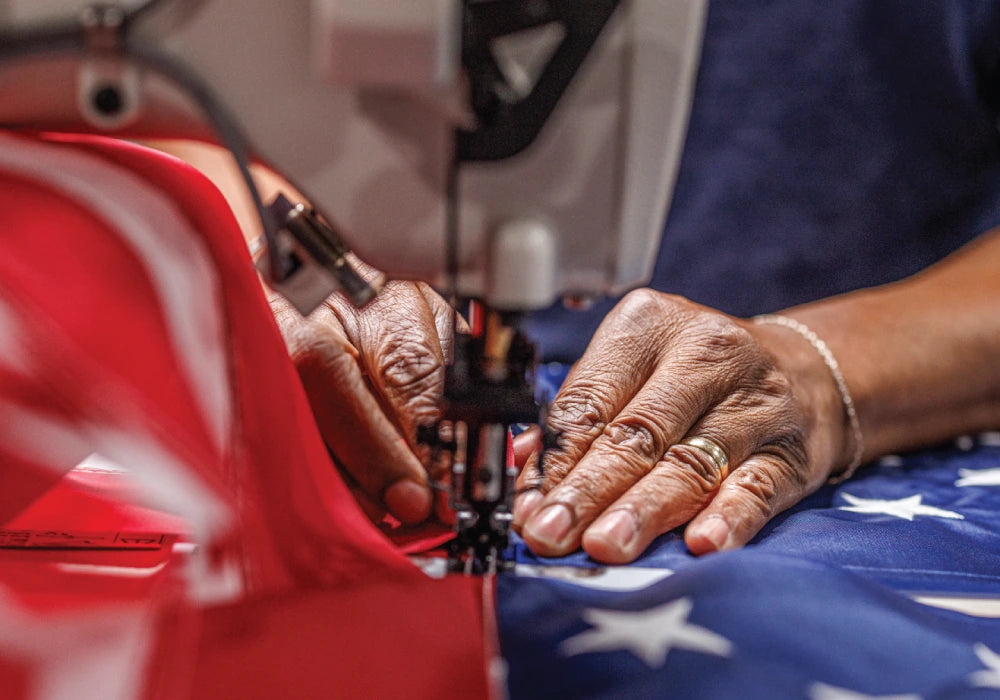

The American flag represents the birth of the United States and is a national symbol. The original had 13 stars and 13 stripes to symbolize the 13 colonies that first made this nation. On June 14th, 1777, an act was established to create an official USA flag for the new nation. The American flag has undergone several iterations since its original design, including the Betsy Ross flag and Old Glory. The history of the American flag is an interesting one that begins with questions about the origin of its design.
Chronological Changes and Congressional Acts
From its inception in 1777, the design of the American flag has served as a living record of the nation’s growth, with each change reflecting the evolving identity of the United States. The original flag, established by the Continental Congress on June 14, 1777, featured thirteen alternating red and white stripes and thirteen white stars on a blue field, symbolizing the unity of the original thirteen colonies. However, as new states joined the Union, the flag’s design needed to be updated to reflect this expanding nation. The first significant modification came with the Flag Act of 1795, which added two stars and two stripes for Vermont and Kentucky, increasing the total to fifteen each. This version, known as the “Star-Spangled Banner” flag, was immortalized during the War of 1812 and inspired the national anthem. Yet, as more states entered the Union, it became clear that continually adding both stars and stripes would result in an impractical design.
To address this, Congress passed the Flag Act of 1818, restoring the number of stripes to thirteen to honor the original colonies while mandating that a new star be added for each new state on the Fourth of July following its admission. This act established the precedent for the flag’s ongoing evolution, with each new star marking a milestone in the nation’s development. Over the years, the arrangement and number of stars changed frequently as states were admitted, resulting in multiple official versions of the flag—twenty-seven in total.
Notably, the 48-star flag, adopted in 1912 after the admission of New Mexico and Arizona, was the first to have its star pattern standardized by executive order. Later, the 49-star flag briefly appeared in 1959 after Alaska’s statehood, followed by the current 50-star flag in 1960, reflecting Hawaii’s admission. Today’s flag, with its thirteen stripes and fifty stars, stands as the longest-used version in American history. Each change to the flag has been guided by legislative acts and presidential proclamations, ensuring the design accurately represents the nation’s composition. This ongoing process not only honors the country’s origins but also symbolizes its capacity for growth and unity. The evolution of the flag’s design is a testament to the dynamic nature of the United States, serving as a visual chronicle of its journey from thirteen fledgling colonies to a union of fifty states.
Surviving Historical Flags and Preservation
Throughout American history, several notable flags from different eras have survived and are preserved as treasured national artifacts. Examples include the original "Old Glory," the Star-Spangled Banner that flew over Fort McHenry in 1814, and the Iwo Jima flag from World War II. These surviving flags are carefully maintained in institutions such as the National Museum of American History, where experts use specialized conservation techniques, like low-oxygen chambers and filtered lighting, to prevent deterioration. Preservation efforts ensure these historic banners remain accessible for future generations, allowing Americans to connect with the tangible symbols of their nation’s past and the stories they represent.
The Original Design of the Flag of the USA
It is widely believed that the first red, white, and blue flag of the United States was designed by Francis Hopkinson, a New Jersey congressman, and sewn by the famous Betsy Ross, a seamstress from Philadelphia. The original design displayed 13 stripes of red and white with a blue square in the corner called the Union Jack. The Union Jack always displays the number of states that have been added to the nation, while the stripes symbolize the original 13 colonies. The flag of the USA goes by many names, such as Old Glory, Red, White, and Blue, and the Stars and Stripes. The song The Star-Spangled Banner was written about the flag, and it also inspired the Pledge of Allegiance.
Flag Day
President Harry Truman declared June 14th as National Flag Day on August 3, 1949. This great symbol of independence and rebirth is celebrated by holding parades, ceremonies, picnics, and other important activities. Foundations that are dedicated to preserving the traditions and history of the flag plan events around the country where everyone can participate and feel national pride.

The Current Design of the Flag of America
What first began as a red and white flag with a blue Union Jack to symbolize the original 13 colonies has now looked the same for the last 50 years. Between 1777 and 1960, the flag underwent several revisions and acts of Congress before finally settling on the configuration we know today. Those designs make up the fascinating story of the American flag's history.
Old Glory
Old Glory was the name given to the 10"x17" flag that was flown on a ship in Massachusetts that survived many attempts during the Civil War to deface it. This flag inspired naming all subsequent flags Old Glory, and after the war ended, it was sent to the National Museum of American History, where it is preserved.
Betsy Ross Flag
It is believed that Betsy Ross, a seamstress in Philadelphia, was at the meeting with George Washington when the original design of the American flag was discussed. In her honor, the Betsy Ross flag is available, and some display this monument of history next to the modern USA flag. The Betsy Ross flag features thirteen stripes and a circle of thirteen stars in the blue union jack in the top left.
Rules Around the American flag
There are several rules around the display and treatment of the American flag that have their origins rooted in the rich history of this symbol. Some rules include:
- The positioning of the flag when it is displayed on the porch, on the wall, or with other flags on a flagstaff
- Times of day to display the flag
- When to fly the flag at half-mast
- Where to display the flag when flying on a boat or car
- What is involved in flying a flag 24 hours a day
- Proper treatment of a flag
Where can you get an American flag?
When you want to purchase a flag made in the USA, you need to look for an American flag store that sources its materials in the USA. Several flag dimensions are available depending on where you are displaying it, and a good flag company will give you some ideas on which flag is appropriate for your home, car, or boat. A flag store that hires American workers using materials from the US is the perfect place to get your flag and show your national pride.
Significant Historical Moments Involving the Flag
Throughout American history, the flag has served as a powerful symbol during moments of triumph, struggle, and unity. Its presence at pivotal events has often transformed it from a simple banner into a lasting emblem of the nation’s ideals and collective experience. Below are seven key historical moments where the American flag played a prominent role:
- The Star-Spangled Banner at Fort McHenry (1814): The flag’s resilience during the 1814 British bombardment of Fort McHenry inspired Francis Scott Key to write “The Star-Spangled Banner,” which later became the national anthem, forever linking the flag to American perseverance and patriotism.
- Raising the Flag at Iwo Jima (1945): At the Battle of Iwo Jima in 1945, U.S. Marines famously raised the flag atop Mount Suribachi. The iconic photograph captured this act, symbolizing hope and sacrifice during World War II and becoming a lasting image of American resolve.
- The Moon Landing (1969): On July 20, 1969, astronauts planted the American flag on the Moon during the Apollo 11 mission. This act marked a defining moment in the Space Race and served as a testament to American ingenuity and achievement on a global stage.
- Raising the Flag at Ground Zero (2001): After the September 11, 2001, attacks, firefighters raised the flag over the rubble at Ground Zero in New York City. The image quickly became a symbol of national resilience, unity, and the enduring spirit of the American people.
- The Flag and the Civil War (1861–1865): During the Civil War, the flag was flown over Fort Sumter and later became a rallying symbol for the Union. Its widespread display across the North helped solidify the flag’s role as a unifying national emblem.
- The Flag at the March on Washington (1963): In 1963, the American flag stood prominently beside Dr. Martin Luther King Jr. as he delivered his “I Have a Dream” speech during the March on Washington, underscoring the flag’s association with the ongoing struggle for civil rights and equality.
- The Miracle on Ice (1980): The flag’s presence at the 1980 Winter Olympics, when the U.S. hockey team defeated the Soviet Union in the “Miracle on Ice,” became a symbol of national pride and unity during a time of international tension.
From battlefields to moments of social progress and collective mourning, the American flag has continuously embodied the nation’s values and aspirations. Its role in these significant events underscores its enduring power as a symbol of hope, unity, and the American spirit.
Related Flags and Notable Variants
Throughout its history, the American flag has not only evolved in its own right but has also inspired a wide range of related flags and notable variants, both within the United States and internationally. These flags reflect the enduring influence of the Stars and Stripes as a symbol of liberty, unity, and national identity, while also highlighting the cultural and historical contexts in which they emerged.
One prominent category of related flags includes those of U.S. states and territories, many of which incorporate elements from the national flag. The use of stars, stripes, and the red, white, and blue color scheme can be seen in numerous state flags, such as those of Hawaii, Texas, and North Carolina, each of which adapts these features to represent its unique history and identity. Beyond state flags, the American flag has also inspired the creation of flags for U.S. territories, government agencies, and branches of the armed forces, each with its own distinctive adaptations. For example, the First Navy Jack, featuring thirteen alternating red and white stripes with a rattlesnake and the motto “Don’t Tread on Me,” served as an early naval ensign and continues to be recognized as a symbol of American resolve and independence.

Internationally, the influence of the American flag is evident in the flags of several nations. Countries such as Liberia, Malaysia, and Uruguay have adopted designs that echo the Stars and Stripes, often as a tribute to American ideals or in recognition of historical ties. The flag of Liberia, for instance, closely resembles the U.S. flag, reflecting the country’s founding by freed American slaves. Similarly, the flag of Malaysia features red and white stripes and a blue canton, symbolizing the nation’s aspirations for unity and independence.
Notable historical variants of the American flag include the Grand Union Flag, considered by many to be the first national flag of the United States. This flag combined the British Union Jack with thirteen red and white stripes, representing the colonies’ initial desire for unity with Britain before the push for independence. Another well-known variant is the Betsy Ross flag, which arranges thirteen stars in a circle, symbolizing equality among the original states. The Star-Spangled Banner flag, with its fifteen stars and stripes, became iconic after its role in inspiring the national anthem during the War of 1812. Other variants, such as the Bennington flag and the Old Glory flag, have become symbols of specific historical moments or regional pride.
The American flag has also served as a model for protest and commemoration. The flag of Bikini Atoll, for example, incorporates the Stars and Stripes but uses blacked-out stars to represent islands lost to nuclear testing, serving as a poignant reminder of the atoll’s history. Additionally, flags created for special occasions demonstrate the flag’s adaptability and its role as a living record of the nation’s growth.
Frequently Asked Questions
Below are answers to frequently asked questions about the symbolism and meaning of the American flag as interpreted throughout its history.
What do the colors of the American flag represent?
Red symbolizes hardiness and valor, white stands for purity and innocence, and blue represents vigilance, perseverance, and justice—qualities that have been widely accepted as the core values of the nation.
What is the meaning behind the thirteen stripes?
The thirteen horizontal stripes, seven red and six white, represent the original thirteen colonies that declared independence from Britain, highlighting the nation’s origins and the unity of its founding states.
Why are there fifty stars on the flag?
Each of the fifty white stars on the blue field symbolizes one state in the Union, reflecting the current composition of the United States and the principle of equal representation.
Why is the blue area on the flag called the “union”?
The blue rectangle, or “union,” signifies the unity of the states. It serves as a visual reminder of the collective strength and perseverance of the nation as a whole.
Has the symbolism of the flag changed over time?
While the basic meanings have remained consistent, the flag has also come to represent broader ideals such as freedom, equality, and national resilience, evolving in significance as the country has grown.
Are there additional interpretations of the flag’s symbolism?
Some historical figures and presidents have offered unique interpretations, associating the colors and elements with courage, high ideals, and the ongoing pursuit of liberty and justice for all.
The American flag is an artifact that should be treasured and cherished as a symbol of national pride when displayed. Understanding the history of the flag is an important step in continuing the long-standing traditions and protocols around displaying Old Glory. Flag Day is an excellent time to come together as a nation and share the flag's fascinating history with future generations, so it is never forgotten. Carry that history forward by choosing a USA-made American flag from Allegiance, where every flag is crafted by American hands to honor the legacy and pride behind Old Glory.