



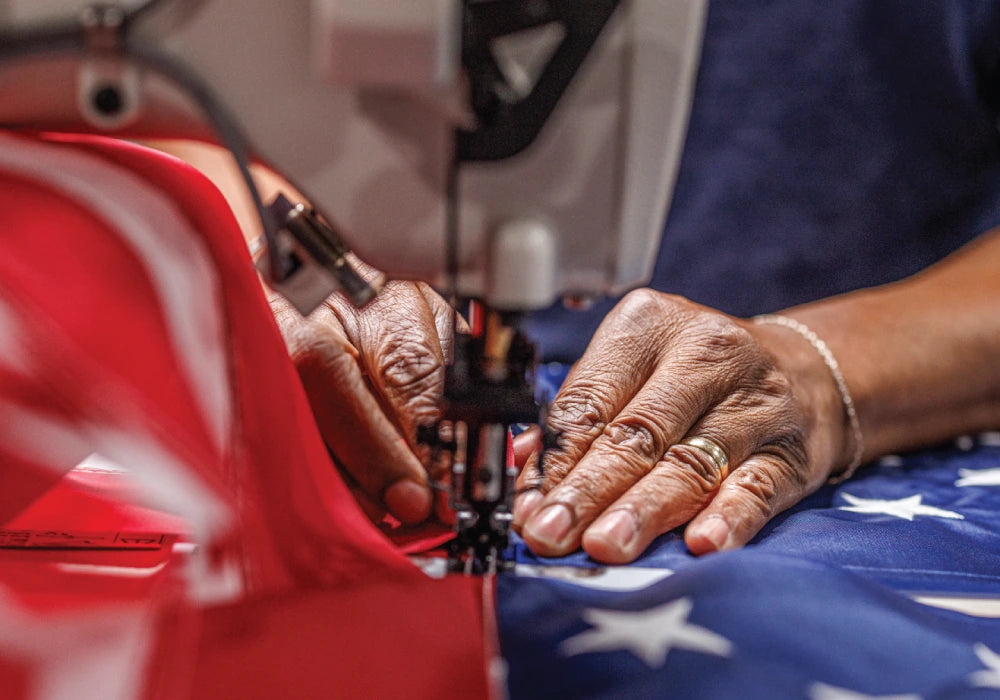

The American flag is a sign of patriotism, independence, and pride in this nation’s history. When choosing a flag for your home, decide where you will display it, and from there choose the dimensions, styles, and fabrics that are appropriate for your home. When looking for a reputable flag store, it is important to choose one in the United States that uses American materials and employs skilled US workers. This will ensure the highest-quality fabric and craftsmanship befitting this great symbol of independence. The most common flag size for the home is 3’ x 5', but larger sizes are available if the area where it is displayed is larger than average.
Displaying the American flag
Choosing a flag of the USA for display at your home can be confusing. Some questions you need to ask yourself when deciding on the size of a USA flag include:
-
Is the flag going to be displayed outside?
-
Will it be raised on a flagpole or hung from a flagstaff?
-
If on a flagpole, how large is the area of display?
-
Is there more than one flag being displayed?
-
What is the height of the flagpole?
A good flag store should be able to help you with these questions and choose the right dimensions. Other questions may arise from answering these ones, which will help you decide on the US flag dimensions that are appropriate for your home.
Flag Size for Different Mounting Types
The recommended flag size for your home varies significantly depending on how and where you plan to display it, with in-ground flagpoles, wall-mounted poles, and displays without a flagpole each requiring different considerations for optimal appearance and respect for the flag. For in-ground flagpoles, which are typically installed in a yard or garden area, the standard guideline is that the flag’s length (the longer side) should be approximately one-quarter to one-third the height of the flagpole. For example, a 20-foot in-ground pole is best paired with a 3’ x 5’ or 4’ x 6’ flag, while taller poles, such as 25 or 30 feet, may require larger flags, like 5’ x 8’ or even 6’ x 10’, to maintain a balanced and proportional look. This proportional approach ensures that the flag is visually prominent without overwhelming the pole or the surrounding landscape. It also helps prevent the flag from touching the ground when lowered to half-staff, which is an important aspect of flag etiquette.
Wall-mounted flagpoles, often attached at an angle to a home’s porch, garage, or exterior wall, follow different recommendations. Here, the width of the flag (the shorter side) should be about half the length of the pole. Most commonly, a 3’ x 5’ flag is paired with a 6- to 8-foot wall-mounted pole, while smaller poles, such as a 5-foot house mount, are best suited to a 2.5’ x 4’ flag. This ensures the flag hangs freely and does not drape over railings, bushes, or other obstacles, preserving its dignity and extending its lifespan by reducing unnecessary wear. It is vital to measure the area around your wall-mounted pole to ensure sufficient clearance for the flag to fly unobstructed and to prevent it from dragging or becoming entangled.
For those wishing to display a flag without a traditional flagpole, there is greater flexibility in flag size. However, the key is to select a flag that fits the available space and maintains a respectful presentation. A 3’ x 5’ flag is often ideal for most residential interior or exterior wall displays, as it offers good visibility without overpowering the setting. When displaying a flag on a flat surface, it should be hung flat with the union (blue field with stars) positioned at the top left from the viewer’s perspective. In these cases, consider the size of the wall or window and choose a flag that allows for clear, unobstructed viewing while avoiding excessive folding or bunching.
Flags Displayed Outdoors
As previously mentioned, the standard-sized flag for most homes is 3’ x 5’ if being displayed on a 15’ flagpole. If you already have a flagpole for your flag and it is well-suited to the area it is in, then your job is done. In some cases, a 3’x5’ flag might get lost in a large area, so you can decide to get a larger flag, like a 4’x6’ or 6’x10’. If you are looking for the right flagpole for your flag or if you are mounting your flag on your front porch, then the dimensions below should help you:
-
2 ½‘ x 4‘ flag on a 5’ house mount
-
3’x5’ flag on a 6’-8’ house mount
-
3’x5’ flag requires an 8’ to 19’ in-ground flagpole
-
4’x6’ flag requires a 20’ flagpole
-
5’ x 8’ flag requires a 25’ flagpole
-
6’ x 10’ flag requires a 30’ to 35’ flagpole
-
8’ x 12’ flag requires a 40’ to 49’ flagpole
These are approximations, and you can judge yourself when you see the flag and pole together whether the sizes fit the location. Whichever size flag you decide on, make sure it is proportionate and not too big or too small. The flag of the USA is a symbol of courage, independence, and sacrifice, and should be displayed with respect and reverence in and outside your home. If your flag is in any way damaged or tattered, it should be fixed immediately so it is displayed at its best. The patriotic flag should never be used as anything but a flag and should be treated with care and dignity.
Materials Used to Make American Flags
Nylon
Nylon flags offer a combination of durability, vivid color, and effortless movement, making them a practical choice for many households. Their lightweight structure allows them to lift easily, even in mild breezes, creating a clean and consistent display throughout the day. High-quality nylon fabrics are often treated with UV-resistant dyes that help maintain brightness even under prolonged sun exposure, making them especially useful for outdoor mounting, where fading can occur quickly. Homeowners appreciate nylon for its versatility, as it performs well in a variety of climates without requiring a heavy pole or specialized hardware. It also dries rapidly after rain, reducing the risk of mildew and extending its lifespan. Because nylon tends to hold its shape and resist shrinkage, it remains crisp and smooth with minimal maintenance. These qualities make nylon a dependable option for everyday flag displays, offering long-lasting color and reliable performance at an accessible price point.
Polyester
If you live in an area with high winds and need a more durable flag, purchase one made of polyester. These flags are usually two-layered and feature special stitching for extra reinforcement. Polyester is the perfect material for flags displayed on boats and cars.
Cotton
Cotton flags are the highest quality flags available and are mostly used for special occasions like the Fourth of July or other commemorative days. They are the most expensive flags, but they are worth every penny as the colors on cotton flags are vibrant and really stand out. These flags should not be flown in inclement weather, so they stay clean and pristine. When you purchase a cotton flag at a United States flag store, you know you are getting American-made, high-quality materials.
Other Factors Affecting Flag Choice
One of the most crucial factors is wind exposure. Flags that are flown in areas with frequent or strong winds are subjected to greater wear and tear, which can lead to fraying, fading, or even tearing if the flag is not suited to such conditions. Before choosing your flag, assess your local environment: homes near coastlines, open fields, or atop hills are likely to experience higher wind speeds than those in sheltered urban or suburban areas. If your location is prone to strong gusts, opting for a heavy-duty flag can help ensure your flag withstands the elements.
It’s also wise to consult the wind speed rating of your flagpole, as exceeding the recommended flag size for your pole’s wind rating can risk damage to both the flag and the pole itself. Flagpoles should be selected that are capable of supporting the most significant flag intended to be flown in the highest wind speed it will be subjected to.
Another essential aspect of flag etiquette is preventing the flag from touching the ground. According to the U.S. Flag Code and general best practices, allowing the flag to drag or rest on the ground is considered disrespectful. It can also result in unnecessary soiling or damage. To avoid this, always ensure your flag is correctly sized for its mounting location and that it has ample clearance from landscaping, fences, or architectural features. For wall-mounted or angled poles, measuring the surrounding space before installation can prevent the flag from brushing against porch railings, bushes, or nearby structures. If you’re displaying your flag on an in-ground pole, remember to factor in the flag’s position when at half-staff, ensuring it remains elevated above the ground at all times.
Additional practical tips can help prolong the life and dignity of your flag display. Routinely inspect your flag for signs of wear, such as fraying edges or faded colors, and replace it promptly if it becomes tattered. If storms or high winds are forecasted, consider temporarily taking your flag down to prevent unnecessary damage. When raising or lowering the flag, handle it with clean hands and avoid letting it touch the ground. For those displaying multiple flags, ensure each is properly sized and spaced to prevent tangling or excessive strain on the pole. Finally, storing your flag in a clean, dry place when not in use can help preserve its appearance for years to come.
Frequently Asked Questions on Special Circumstances and Multiple Flags
Displaying the American flag at home sometimes involves unique situations, such as flying more than one flag, showcasing your flag indoors, or adhering to special flag specifications. Here are answers to common questions about these special circumstances to help you display your flag with confidence and respect.
Can I fly two flags on the same flagpole at home?
Yes, but ensure the combined area of both flags does not exceed the maximum size recommended for your flagpole. This prevents excess strain and maintains a balanced, respectful display.
What is the proper order when flying multiple flags on one pole?
The U.S. flag should always be at the top and of equal or larger size than any other flag below it. This order upholds flag etiquette and national respect.
How do I choose the right flag size for indoor displays?
Select a flag size that matches your indoor flagpole height and the room’s proportions. For most homes, a 3’ x 5’ flag on a 7’ or 8’ pole offers a dignified, balanced look.
Are there special flag sizes or specifications I should know about?
Government and military locations often require G-spec flags, which follow precise size and proportion standards. For home use, standard flags are suitable unless a specific size is required for a ceremony or display.
Can I display a flag indoors without a pole?
Yes, you can hang a flag flat on a wall. Ensure the union (blue field with stars) is at the top left from the viewer’s perspective for proper orientation and respect.
A well-chosen American flag does more than decorate your home; it reflects a deep respect for the nation’s history and the values it represents. By understanding where and how you plan to display your flag, you can select the size, fabric, and mounting style that best suit your space while honoring proper etiquette. Whether you choose durable polyester for high-wind conditions, vibrant cotton for special occasions, or versatile nylon for everyday use, investing in quality materials ensures your flag remains a strong and enduring symbol. Taking time to measure your display area, consider environmental factors, and follow established guidelines helps preserve the dignity of your flag and extends its lifespan. With mindful care and thoughtful selection, your American flag can serve as a meaningful expression of patriotism, standing proudly at your home for years to come. Honor your home with a symbol that lasts by choosing a high-quality flag from Allegiance today.