



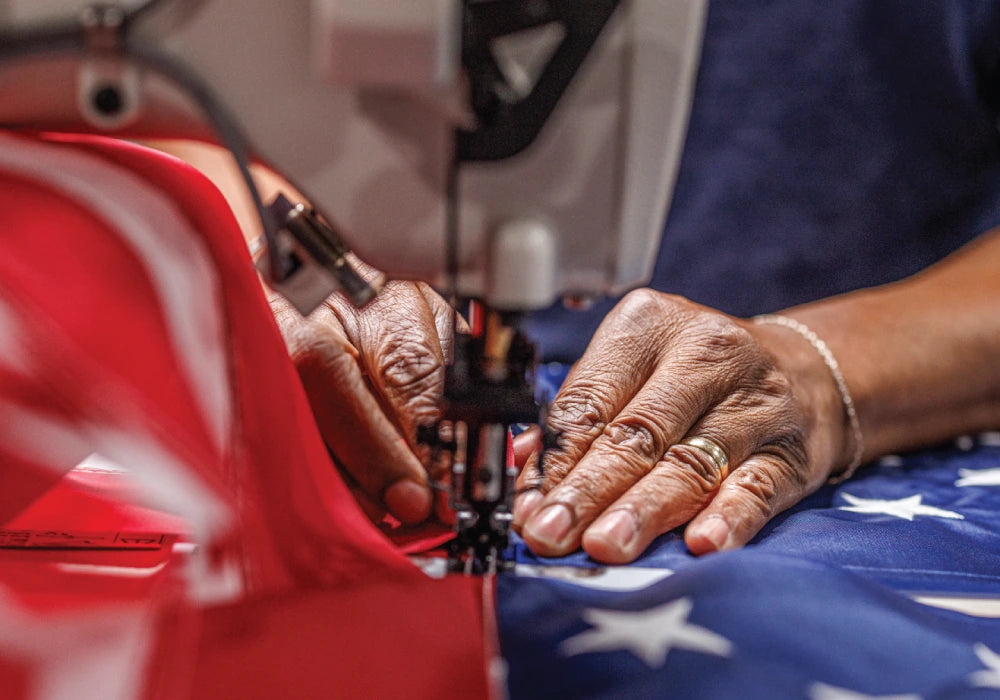

When displaying your American flag, you should always research the appropriate size for the area where you plan to display it. Whether it is being flown on your front porch, hung on your wall, or flown from your car, there is an appropriate size for you. Flying the flag of the USA is a way of showing your national pride, so make sure it is flown with the respect and honor it deserves.
American Flag Layout and Proportions
The design of the American flag is governed by precise rules that ensure every flag, regardless of its overall size, maintains the same iconic appearance and symbolism. The flag consists of thirteen horizontal stripes of equal width, alternating red and white, which represent the original thirteen colonies. In the upper left corner (the canton), there is a blue rectangle known as the Union, which houses fifty white, five-pointed stars arranged in nine offset rows. The careful arrangement and sizing of these elements are dictated by official specifications, most notably Title 4 of the United States Code.
The proportions of the American flag are standardized to maintain uniformity. The official aspect ratio of the flag is 10 units in height (hoist) to 19 units in length (fly). Each of the thirteen stripes is exactly 1/13th of the flag's height, ensuring they are of equal width. The Union, or blue field, occupies the top left corner and spans the width of seven stripes (or 7/13 of the flag’s height) and extends 2/5 of the flag’s total length. Within the Union, the fifty stars are arranged in nine staggered horizontal rows—five rows of six stars alternating with four rows of five stars. This offset pattern ensures that the stars are evenly distributed and visually balanced within the blue field.
The size and placement of the stars are also precisely regulated. Each star’s diameter is approximately 4/5 the width of a single stripe, and the vertical and horizontal spacing between stars is carefully calculated to maintain symmetry. For example, the vertical distance between the centers of adjacent stars is 1/10 the height of the Union, while the horizontal distance is 1/12 the width of the Union. These measurements ensure that the stars fill the blue field without overcrowding or excessive empty space.
The Union itself is a deep blue rectangle, symbolizing vigilance, perseverance, and justice. Its dimensions and placement are crucial to the flag’s appearance. When the flag is displayed, the Union should always be positioned at the observer’s upper left. This is true whether the flag is hung vertically or horizontally, and is an important element of flag etiquette.
These proportion rules are strictly followed in the manufacture of official American flags, especially those used by government agencies, the military, or for ceremonial purposes. While decorative or novelty flags may sometimes deviate from these standards, any flag intended for official or respectful display should adhere to these guidelines.

Standard American Flag Dimensions
A flag's dimensions will be in direct proportion to the height of the pole it is sitting on. The following table will help you determine the size to get when displaying the American flag on your house, lawn, wall, or desk. Typical flag sizes range from 3 feet by 5 feet to 5 feet by 8 feet, but can get as large as 20 feet by 38 feet.
- 3x5 American flag - The 3x5 American flag is the most commonly used size for residential display and is widely recognized as the standard household flag. It is designed to pair with a 20-foot flagpole, which provides enough height for the flag to be clearly visible without overwhelming the scale of a home or yard. This size works well for front lawns, garden poles, and angled porch mounts, making it highly versatile. Its proportions allow the flag to fly freely in moderate wind without placing excessive stress on seams or grommets. Homeowners often choose this size because it offers a dignified appearance while remaining manageable for regular raising, lowering, and storage. The 3x5 flag also balances durability with convenience, as it is large enough to be seen from the street but small enough to be folded and stored properly when not in use. Because it is exposed to the weather more frequently than indoor flags, this size is often produced using durable materials designed for outdoor conditions. When paired with the correct pole height, the 3x5 flag maintains visual harmony and adheres to widely accepted standards for respectful residential display.
- 4x6 American flag - This size is intended for use with a 25-foot flagpole, allowing the flag to command attention in open areas such as schools, small municipal buildings, memorial spaces, and business properties. Its increased surface area improves visibility from a distance while still maintaining proportional balance. The 4x6 flag is often selected when a standard residential size appears too small for the surrounding environment. This size also performs well in areas with consistent airflow, as the added fabric weight allows the flag to fly smoothly without appearing limp. From a presentation standpoint, it communicates formality and permanence, making it suitable for locations where the flag is meant to represent an organization or public presence rather than a private residence. Handling and maintenance require slightly more care than smaller flags, particularly during folding and storage, but remain manageable for routine use.
- 5x8 American flag - It requires a 30-foot flagpole to maintain proper proportion and visibility. At this scale, the flag becomes a focal point, often intended to be seen from long distances. Because of its size, this flag is rarely used for private homes, as it can visually overpower residential structures and require specialized hardware. The larger surface area increases wind resistance, making proper pole strength and secure mounting essential. This size is frequently chosen for civic ceremonies, government facilities, and commercial properties where a strong visual statement is appropriate. Maintenance considerations become more important, as exposure to weather can accelerate wear if materials are not suited for outdoor conditions.
- 6x10 American flag - This flag is reserved for large-scale public use and requires a minimum 40-foot flagpole to display correctly. This size is most often seen at stadiums, large civic centers, historical sites, and major public events. Its substantial dimensions create a commanding presence, making it ideal for expansive areas where smaller flags would appear insignificant. Because of its size, this flag experiences greater stress from wind and weather, necessitating reinforced stitching, heavy-duty hardware, and professional-grade materials. Handling a 6x10 flag typically involves multiple people, particularly during raising, lowering, and folding, to prevent damage or ground contact. This size is not intended for routine residential use due to its scale and maintenance demands. When properly displayed, however, it delivers a powerful visual representation of national pride and unity. The 6x10 flag serves as a centerpiece rather than an accent, emphasizing ceremony, remembrance, and collective identity.
Typical measurements and aspect ratios for American flags across various contexts. Flags that are displayed on flagpoles can be anywhere from 20 feet to 38 feet on a pole that is 100 feet high. This is large for American flag sizes and is usually flown at official government buildings.
Sizes of the American Flag Flown over the Capitol
In 1937, the Capitol Flag Program was started, where you could pay to have an American flag flown over the Capitol in honor or memory of a person or occasion.
Flags for Boats
US flag sizes for boats are connected to the size of the boat they are being flown from. Some USA flag sizes appropriate for motorboats and sailboats include:
- Under 20 feet - an 8" x 12" flag is an appropriate size for this length of the boat and is usually displayed at the stern of the boat unless otherwise specified. It is always a good idea to find out ahead of time what the flag rules are when venturing into unfamiliar territory.
- 20 feet to 29 feet - a 10"x15" flag is a good size for a boat of this length
- 30 feet to 39 feet - Choose a 12"x18" flag for this boat
- 40 feet to 49 feet - 14"x21" flag
- 50 feet to 59 feet - 16"x24" flag
- 60 feet to 69 feet - 20"x30" flag
There are more dimensions available online for boats ranging from 70 to 100 feet.
Dimensions of Flags for Cars and Trucks
The standard size of a flag for a moving vehicle is 11.5" by 18", with various protocols as to where on the vehicle and how high the flag should be. If you are flying another flag at the same time, make sure to research the best way to display each flag so you show proper respect and follow protocol.
The Position of the Union Jack and the Stripes
When having a flag made for your home, you can choose the desired width and length and have the manufacturer figure out the proper dimensions for the Union Jack and the stripes. The placement of these flag elements has strict dimensional rules, especially when the flag is used for official purposes. Any high-quality flag made in the United States will have the proper dimensions that show Old Glory the respect it deserves.

Custom and Special Flag Sizes
When standard flag sizes don’t fit your vision or requirements, custom and special flag sizes offer a flexible solution for unique spaces, events, or statements. Whether you need a flag for a business promotion, a special occasion, or an unusual display area, ordering a custom-sized flag ensures your needs are met with precision and style. Below are key considerations and options when exploring custom and special flag sizes:
- Full Flexibility in Sizing: Custom flags can be made in virtually any dimension, allowing you to perfectly match the flag to your desired location, pole height, or display area. This flexibility is ideal for spaces where standard sizes would look awkward or fail to make the intended impact. When ordering, provide precise measurements and consider the flag’s proportions to ensure a balanced and visually appealing result.
- Choice of Materials: Many flag manufacturers offer a wide range of materials for custom flags, such as nylon, polyester, or cotton. The choice of material affects the flag’s appearance, durability, and suitability for indoor or outdoor use. For example, nylon is lightweight and dries quickly, while polyester is more durable for high-wind areas.
- Personalization for Special Occasions: Custom flags are popular for commemorating special occasions, such as anniversaries, grand openings, or community events. You can specify not only the size but also custom graphics, text, or logos to create a one-of-a-kind flag that marks the event and draws attention. This makes custom flags a favorite for both personal celebrations and business promotions.
- Manufacturer Size Capabilities: When ordering a custom-sized flag, it’s important to check the manufacturer’s minimum and maximum size capabilities. Some companies can produce very large flags for stadiums or public venues, while others may specialize in smaller, detailed flags for desktops or ceremonial use. Always confirm the available size range before finalizing your order.
- Unique Shapes and Display Options: Special flag shapes, such as vertical banners, pennants, or feather flags, are often available as custom options. These non-standard shapes can enhance visibility or complement unique architectural features. Be sure to discuss the intended shape and mounting method with your supplier to ensure the finished flag displays correctly and withstands the elements.
- Production Timeline Considerations: Lead times for custom flag orders can vary depending on complexity, size, and demand. Plan ahead, especially if the flag is needed for a specific date or event. Ask the manufacturer for an estimated production and delivery timeline, and factor in extra time for design proofs, revisions, and shipping.
- Budget and Pricing Factors: Pricing for custom-sized flags typically depends on size, material, quantity, and design complexity. Larger or highly detailed flags may cost more, especially if special printing or embroidery is required. Request a detailed quote and review all options to balance your budget with your vision for the finished flag.
Custom and special flag sizes let you create a display that stands out and fits your requirements perfectly. By considering material, size range, shape, timing, and cost, you can ensure your custom flag is both functional and memorable for any occasion or location.
One must learn how to choose the appropriate flag size based on factors like flagpole height, location, and intended display. Where you are displaying the flag, outside or inside, is an important question to answer before investing in a good-quality flag. Find the perfectly sized American flag for your home, vehicle, or custom display at Allegiance, where USA-made flags are crafted to fly with proper proportion, quality, and pride. A reputable flag company will be able to help you with the question of what-sized flag you need so you can display this symbol of independence proudly.