



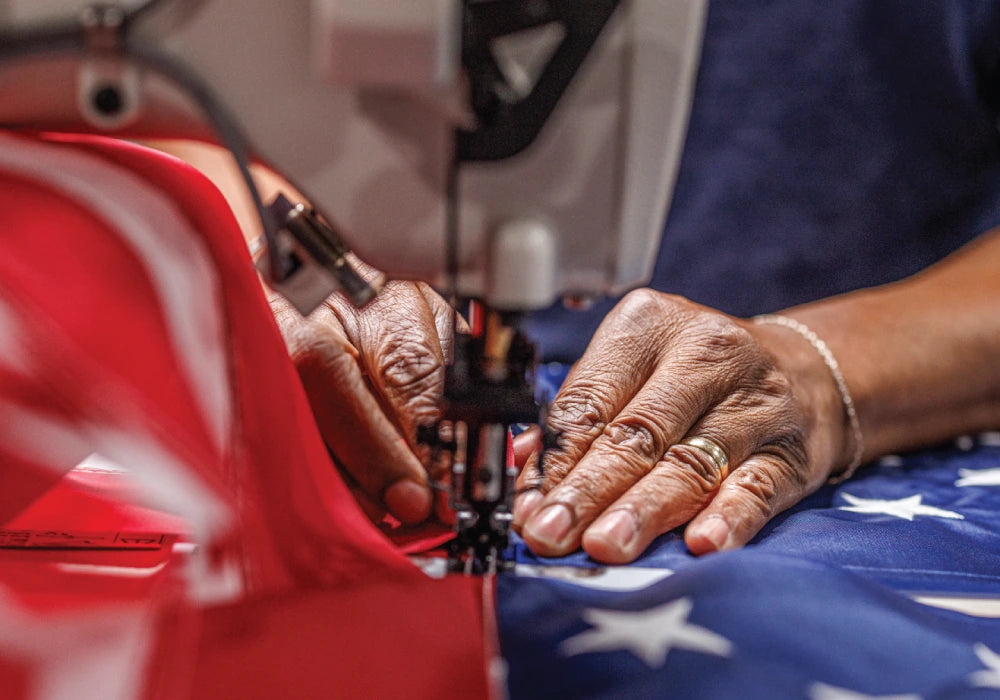

Displaying the American flag is a proud tradition, but it comes with a responsibility to follow proper guidelines. Many people want to show patriotism by flying “Old Glory,” yet they may not know the flag display rules set out for respectful handling of the flag. About 62% of Americans display the flag at home, work, or on their car, but far fewer are familiar with the official protocols for care and display. This article will delve into American flag etiquette as defined by the U.S. Flag Code and longstanding custom. We’ll cover the do’s and don’ts of flag display, USA flag regulations and traditions, how to handle special situations like multiple flags or half-staff observances, and tips on flag care.
What Is the U.S. Flag Code?
To learn proper flag etiquette, it helps to start with the American flag code itself. The Flag Code is the federal law that outlines rules for American flags regarding display and care. It originated as the National Flag Code created in 1923 by patriotic organizations, and it was adopted as Public Law in 1942 during World War II. Today, it’s found in Title 4 of the United States Code. This code is essentially a guide to flag rules in the USA.

The Flag Code does not impose penalties on citizens for violations. It’s largely advisory and intended to encourage respect. This means that while no one will be fined or arrested for improper display, following the code is considered a matter of honor and patriotism. In essence, the Flag Code and related U.S. flag protocol represent a shared standard of respect. Abiding by these guidelines shows reverence for what the flag stands for, which is national unity, history, and the sacrifices of those who have defended it.
Flag Display Do’s: How to Show Respect
When flying the U.S. flag, there are many best practices you should follow to honor it properly. Here are some key proper flag display guidelines every American should know:
-
Follow time of day guidelines: It is customary to display the flag only from sunrise to sunset. If you want to display it at night, be sure it is properly illuminated during the hours of darkness. Flying the flag 24 hours a day is permissible only when it’s lit up at night. Additionally, the flag should not be displayed during inclement weather, such as rain or snow, unless you have an all-weather flag made of nylon or another material that can withstand the elements. These practices are specifically recommended in the U.S. Flag Code for maintaining respect.
-
Hoist and lower it correctly: When raising the flag on a pole, do so briskly. When lowering it, do so slowly and ceremoniously. The brisk rise symbolizes the eagerness and pride in our nation, while a slow, respectful lowering symbolizes reverence. If you’re participating in a flag ceremony, carry the flag folded neatly and treat it with dignity until it’s time to unfurl it.
-
Keep the flag clean and intact: Always display a flag that is in good condition. The flag should be free of dirt, stains, rips, and fraying. Using a proper way to hang American flags includes checking that the flag isn’t upside down or backwards. When displayed either horizontally or vertically against a wall, the flag’s union must be positioned at the top and to the flag’s own right, which is to the observer’s left. In a window display, the union should likewise be on the left side as viewed from the street. Ensuring the correct orientation is a simple but important sign of respect.
-
Allow it to fly freely: Whether on a flagpole or hanging, the flag should be able to fall free and fly naturally. If mounted on a staff or pole at an angle, the union should be at the peak of the staff. Do not tie or secure the flag in a way that prevents it from moving, and never stretch it out flat like a banner using tacks or clamps. A flag is meant to wave as a living symbol, not be strangled or held taut. Make sure the flag is not obstructed by tree branches, wires, or other objects that could snag or tear it.
-
Show respect during hoisting and lowering: During any ceremony where the flag is raised or lowered, or when the flag passes by in a parade, observers should salute or place their hand over their heart. Stand at attention and face the flag. Men not in uniform should remove any hats. Veterans and military members not in uniform may render a hand salute. This is part of proper etiquette to honor the flag whenever it is presented.
By following these flag display rules and practices, you demonstrate your patriotism and uphold the dignity of the American flag.
Flag Display Don’ts: Common Mistakes to Avoid
Just as important as what you should do is knowing what not to do. The U.S. Flag Code and tradition outline several clear rules for American flags that prohibit disrespectful uses. Out of respect for the flag, never do the following:
-
Don’t let it touch the ground or floor: The American flag should never touch anything beneath it, whether that’s the ground, the floor, water, or merchandise. Allowing it to drag or touch the ground is considered disrespectful. If the flag accidentally touches the ground, it isn’t required to be destroyed, but you should clean it if it’s soiled.
-
Don’t carry it flat or horizontally: The flag should always be allowed to fall free. It must not be carried flat or horizontally. In parades or marches, it should be carried aloft and free, not stretched out flat.
-
Don’t use it as clothing or bedding: The flag itself should not be worn as apparel, used as bedding, or as drapery. This means you shouldn’t make a flag into a shirt, costume, or curtains. Attaching small flag patches to military, police, or firefighter uniforms is acceptable, as those are official and respectful uses. Likewise, don’t use the flag to cover a statue or monument, or as a seat cover, etc., outside of authorized ceremonial uses.
-
Don’t place objects or markings on it: Never place any letters, insignia, or designs of any kind on the flag. It should not be written on or marked in any way. For example, don’t autograph a flag or pin badges/medals directly onto it. Also, do not use the flag as a receptacle. You shouldn’t use it to carry things.
-
Don’t use it for advertising or disposable items: The flag should not be used for advertising purposes. This means you shouldn’t print the flag on paper napkins, plates, or anything intended for temporary use and disposal. Using the flag’s image or design in commercials or on merchandise like t-shirts and swimsuits is discouraged by etiquette. Essentially, any trivialization or commercialization of the flag is considered disrespectful.
-
Don’t dip the flag to anyone: In formal situations, other flags or standards may be “dipped” as a salute, but the U.S. flag is never dipped to any person or thing. It is kept upright at all times except when folded for storage.
By avoiding these flag rules in the USA, you ensure you’re not inadvertently disrespecting the nation’s most important symbol. Many of these “don’ts” come directly from the U.S. Flag Code and are widely accepted as proper American flag edicate.

Displaying the Flag with Other Flags
In any American flag display with other flags, certain rules apply to ensure the American flag remains preeminent. If flags are on separate poles, the U.S. flag should be hoisted on the center pole or the highest pole. No other flag on adjacent poles should be higher. If they are all at the same height, the U.S. flag is traditionally placed to its own right. The U.S. flag is usually raised first and lowered last. When flag etiquette with other flags is observed, the American flag will either be the tallest or in the center of a grouping.
It is generally recommended to have the U.S. flag on its own pole. However, if flags are flown on the same halyard (string) on one pole, the U.S. flag must always be at the top. State, city, or organizational flags can fly below it (never above). Only in a rare exception (such as during church services at sea on naval ships) is another flag flown above the U.S. flag, and that exception is specifically noted in Navy regulations.
International usage forbids displaying the flag of one nation above that of another in times of peace. So, if the U.S. flag is displayed with flags of other countries, they should be on separate flagpoles at the same height. Each national flag should be the same size, and the U.S. flag is positioned to its own right in the lineup. In a grouped display, it may appear in the center if other national flags flank it, but no flag is higher than any other. This equality shows mutual respect between nations.
Half-Staff Display: Paying Respect in Mourning
Flying the flag at half-staff is a symbol of mourning or respect for the deceased, and there are specific American flag half-staff rules to follow. “Half-staff” means the flag is lowered to roughly halfway down the pole. The U.S. flag is flown at half-staff by order of the President of the United States or a state Governor, typically upon the death of a principal figure of the U.S. government and state governments, or following a national tragedy. For example, the death of a sitting or former President, a significant national figure, or an extraordinary loss of life (such as after a national disaster or tragic event) may prompt such an order. The flag may also be lowered on certain solemn commemorations: by tradition, Peace Officers Memorial Day (May 15) and Patriot Day (September 11) are observed with half-staff, among others, when proclaimed by the President.
To lower a flag to half-staff, first hoist it briskly to the peak of the pole for an instant, then slowly lower it to the half-staff position. When taking it down for the day, again raise it to the top briefly, then lower it completely. This ritual ensures the flag is saluted by raising it fully before it takes the mourning position. If using a telescoping pole or an indoor stand, simulate this by pausing at the top position during the process.
Care and Disposal of Worn Flags
Treating the flag respectfully isn’t just about how you fly it. It’s also about how you maintain it and, when the time comes, how you retire it. Here are some guidelines on caring for your flag and the protocol for disposal:
-
Keeping the flag clean and repaired: An outdoor flag can become dirty or faded over time from exposure to sun, rain, and wind. It’s acceptable to wash or dry-clean a flag to keep it looking its best, as long as you handle it respectfully. If you notice loose threads or minor fraying on the edges, you can trim and hem them. However, once a flag becomes very worn or tattered beyond repair, it’s time to replace it. Always have a clean, presentable flag for display. Remember, a torn or dirty flag can appear as a sign of neglect, whereas a bright, intact flag symbolizes honor.
-
When to retire a flag: The Flag Code states that when a flag is “worn out or no longer a fitting emblem for display,” it should be retired and destroyed in a dignified way. This typically means that when the fabric is so faded, threadbare, or tattered that it’s not suitable to represent the country.
-
Proper flag disposal (retirement): The traditional method for disposing of an unserviceable American flag is to burn it in a dignified ceremonial manner. This might sound startling, but burning is considered the most respectful way to return a worn flag to ashes. Typically, the flag is folded properly one last time, and then it is placed into a fire of sufficient size to ensure it is completely consumed. This should be done discreetly and with respect. Many American Legion posts, VFW chapters, Boy Scout troops, and other organizations hold periodic flag retirement ceremonies that the public can attend or use to dispose of flags. During such a ceremony, participants often salute the flag, recite the Pledge of Allegiance, or observe a moment of silence as the flag burns. Never simply toss a flag in the trash. If burning the flag isn’t feasible for you, you can also bury the folded flag in a dignified box or contact local veterans’ organizations, who will often collect flags for proper disposal.
-
Show dignity throughout the process: However you choose to retire the flag, do it with the same respect as you would display it. This means no joking or casual handling during the disposal. For example, it’s considered disrespectful to burn a flag along with regular garbage or to leave a fire unattended. Remain present until the flag is fully consumed or properly buried.
As a note of reassurance, accidental damage to a flag isn’t considered a violation of honor as long as you respond appropriately. The key is the intention to show respect.
Choosing the Right Flag and Flagpole
If you’re new to flying the flag, you might wonder about the proper way to hang American flags at your home or business, or what equipment you’ll need. Here are a few tips on selecting flags and accessories:
-
Flag size and proportions: The United States flag has an official proportion of 10:19. Most standard U.S. flags you can buy adhere to this. Common outdoor flag sizes are 3’x5’, 4’x6’, or 5’x8’, etc. Choose a size that suits your flagpole or display area.
-
Quality materials: U.S. flags come in various fabrics. For outdoor use, nylon and polyester are popular. All-weather nylon flags are great for withstanding rain and sun. Heavy-duty woven polyester flags are very durable in windy conditions. Cotton flags have a traditional look and are suitable for indoor display or ceremonial use, but they are less durable outdoors and can bleed colors when wet. No matter the material, ensure the colors are vibrant. For reference, the American flag color code defines the deep hues as Old Glory Red and Old Glory Blue, the iconic shades used on the flag.
-
Flagpole and mounting: If you don’t already have a flagpole, consider American flagpole kits for a simple setup. These kits typically include a pole, a flag of the correct size, and mounting hardware like brackets and finials. Using a kit ensures you have everything needed for proper flag display at your home. There are house-mounted kits and ground-mounted flagpole kits. Choose according to your space and preference. Always install the pole securely so it won’t topple or wobble.
-
Buying authentic, quality flags: When you purchase American flags online or in stores, make sure you’re getting a product that meets U.S. specifications. High-quality flags not only last longer but also look more respectful. Allegiance, a reputable American flag supplier, offers U.S.-made flags and complete kits so that buyers can confidently display their flags correctly and proudly. Getting a good-quality flag and pole from a trusted source means you won’t have to worry about the flag fraying prematurely or the colors fading quickly. It also supports American manufacturing if you choose U.S.-made products.
By selecting the right flag and hardware, you set yourself up for success in displaying the flag with respect.

The American flag is more than just a piece of cloth. It’s a powerful symbol of the nation’s ideals, history, and unity. Learning and observing U.S. flag protocol is a way for each of us to show that we honor those ideals and the sacrifices made in their name. From the everyday act of raising the flag in our yards to somber moments of lowering it to half-staff, each gesture carries meaning. By following the do’s and don’ts of American flag etiquette, you demonstrate respect for everything the flag represents: liberty, justice, and the collective spirit of the American people.
Sources
-
Pew Research Center – “Who Flies the Flag? Not Always Who You Might Think” (2007 survey report on patriotism and flag display)
-
U.S. Department of War – “Do’s and Don’ts for Displaying Old Glory” (Susan H. Lawson, July 2019)
-
U.S. Department of Veterans Affairs – “Guidelines for Display of the Flag” (VA.gov informational PDF)
-
Veterans of Foreign Wars – “Flag Etiquette” (VFW.org guidelines for flag display and handling)