



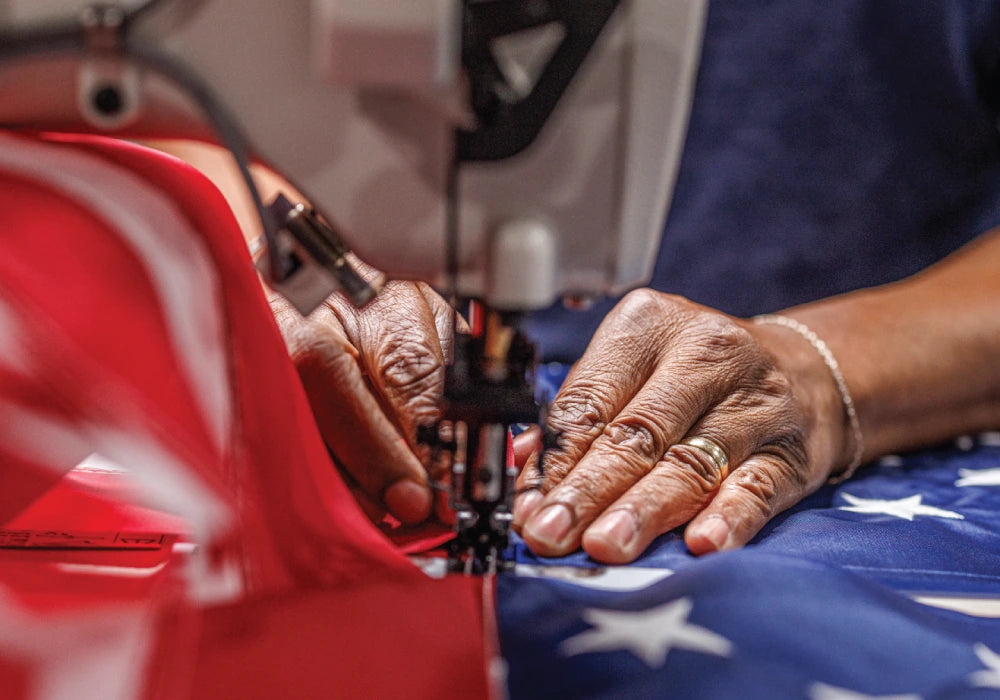

The American flag is a symbol of freedom, history, and pride. When you show your pride by flying a USA flag outside of your home, you show everyone your pride in being a part of this great nation. When you make the decision to fly the flag, you should be aware of the customs and etiquette surrounding Old Glory and understand that as a flag bearer, it is your responsibility to show the flag USA the respect it deserves. If you do a search for a flag company in the United States, they should offer information on American flag sizes and which flag sizes are appropriate for your display area of choice.
Legal and Historical Foundations of American Flag Etiquette
The foundation of American flag etiquette is deeply rooted in both legislative action and historical tradition, reflecting the nation's enduring respect for its most prominent national symbol. The primary legal framework governing the display and treatment of the flag is the United States Flag Code, codified in Title 4, United States Code, Chapter 1. First established by the National Flag Conference in 1923 and later adopted by Congress in 1942, the Flag Code was designed to unify and formalize the customs and practices that had developed organically since the nation's founding. Its purpose is to provide guidance for both civilians and government entities on how to properly honor the flag, detailing everything from the manner of display to the appropriate conduct during ceremonies. The Flag Code is not legally enforceable for private citizens, but its provisions are widely regarded as the standard for patriotic respect and are often reinforced by state laws, some of which do impose penalties for certain forms of flag desecration.
Historically, the reverence for the American flag dates back to the Revolutionary era. The original "Stars and Stripes" design was adopted by the Continental Congress on June 14, 1777, through the Flag Act, which stated, “Resolved, That the flag of the United States be made of thirteen stripes, alternate red and white; that the union be thirteen stars, white in a blue field, representing a new Constellation.” Over time, as the nation expanded, additional stars were added to represent new states, but the principles of respect and symbolism remained unchanged. The flag has become a living emblem of national unity, sacrifice, and freedom, values enshrined in both law and collective memory. Stories such as that of "Old Glory," the flag cherished by Captain William Driver, and the origins of the "Star-Spangled Banner" during the War of 1812, underscore the flag’s role in American history and identity.
Legislative developments have continued to shape flag etiquette. The Flag Protection Act of 1989, for example, sought to criminalize flag desecration but was ultimately struck down by the Supreme Court as a violation of free speech under the First Amendment. This legal precedent reinforced the idea that, while the Flag Code sets a standard for respect, it cannot override constitutional freedoms. Additionally, Congress has periodically updated the Flag Code to address new circumstances, such as recognizing the POW/MIA flag and establishing specific guidelines for its display on federal property. Executive orders, like President Eisenhower’s 1959 order establishing the current 50-star flag, further demonstrate the evolving yet enduring nature of flag etiquette in American law and tradition.

Raising and Lowering the Flag
To display the American flag correctly, it should be hoisted briskly and lowered ceremoniously, always ensuring it never touches the ground. It should be done quickly and raised to the top of the flagpole unless it is being flown at half-mast. You must also salute the patriot flag as it is being raised. When the flag is lowered before sundown, it should be done slowly and ceremoniously as a sign of reverence and respect. Once removed, the flag should be folded neatly and properly into a triangle and stored safely.
Prohibited Uses and Misuse of the Flag
While the American flag is a cherished symbol of national pride and unity, there are important guidelines designed to prevent misuse and maintain its dignity. Certain actions and uses are discouraged or expressly prohibited by flag etiquette, helping to ensure that the flag is always treated with the utmost respect. Below are key examples of how the flag should not be used:
- No Use in Advertising: The flag should never be used for advertising purposes. This includes printing the flag or any part of it on promotional materials, disposable items, or packaging intended to be discarded after use. Using the flag to draw attention to commercial products or services is considered disrespectful and diminishes its symbolic value.
- Prohibited as Apparel or Drapery: It is not permitted to use the flag as clothing, bedding, or drapery. The flag should never be fashioned into apparel, costumes, or accessories. While flag patches may be worn by members of the military, police, or patriotic organizations, using the actual flag or its design as everyday wear is discouraged.
- Not for Decoration or Ornamentation: The flag should not be used as a decoration or for ornamental purposes. Instead of draping the flag over tables, podiums, or as a backdrop, bunting in the flag’s colors should be used. This helps maintain the distinction between honoring the flag and using it as a mere decoration.
- No Markings or Alterations: No part of the flag should ever be marked, written on, or adorned with any insignia, letters, or designs. Adding words, logos, or images to the flag is considered a misuse, as it alters and detracts from its intended appearance and meaning.
- Never Used as a Container or Cover: The flag must never be used as a receptacle for carrying or holding items, nor should it be used to cover objects, including ceilings or statues. The flag’s role is to serve as a symbol of the nation, not as a utilitarian object for everyday tasks.
By observing these guidelines, individuals can help preserve the honor and integrity of the American flag. Treating the flag with respect at all times reinforces its role as a powerful emblem of national values and unity.
Guidelines for Displaying the American Flag with Other Flags
When displaying the American flag alongside other flags, such as state, organizational, or international flags, there are important protocols to follow to ensure proper respect and positioning. The American flag should always occupy a prominent position. If flown on the same flagpole with other flags, the U.S. flag must be at the peak, with any other flag directly beneath it. When flown on adjacent flagpoles, the American flag should be hoisted first and lowered last, and no other flag should be placed above or to the flag’s right (the observer’s left). In group displays with multiple flags, the U.S. flag should be at the center and at the highest point. For international displays, each nation's flag should be flown from its own staff of equal height, and all flags should be of similar size; the U.S. flag should not be displayed above or in a position of superior prominence to another nation’s flag in times of peace. When displayed with state or organizational flags, the American flag is given the place of honor, typically to its own right or at the center of a line. Following these guidelines demonstrates respect for the flag and ensures that all flags are displayed in accordance with established etiquette.
Displaying the American Flag from a Window
If you live in an apartment building, you may have no choice but to fly your flag from a window. When you do this, you must adhere to the protocols around the American flag. Place the stars in the upper left corner as seen from the road. This means that the union will be on the upper right-hand side of the flag when you look at it from the inside.
Flying the American Flag at Half-Staff
Understanding and following the correct procedures for displaying the flag at half-staff is an important aspect of flag etiquette, reflecting respect for those being remembered and for the traditions of the nation. The process begins with raising the flag briskly to the top of the flagpole before lowering it slowly to the half-staff position, which is defined as halfway between the top and bottom of the staff. This initial act of raising the flag to the peak symbolizes the nation's living spirit, while lowering it to half-staff signifies mourning and respect. At the end of the day, or when the flag is to be taken down, it should again be raised to the peak before being fully lowered and removed. This ritual is not only a mark of respect but also a demonstration of adherence to long-established customs.
There are specific occasions and protocols dictating when the American flag should be flown at half-staff. By presidential proclamation or order of the state governor, the flag is lowered to half-staff to mark the death of principal figures of the United States Government, including the President, Vice President, Chief Justice, or retired Chief Justice of the Supreme Court, Speaker of the House of Representatives, and other high-ranking officials. The duration of the half-staff display varies depending on the office held; for example, following the death of a sitting or former President, the flag is flown at half-staff for thirty days, while for a Vice President, Chief Justice, or Speaker, it is ten days. For other officials, such as members of Congress, the flag is flown at half-staff on the day of death and the following day. Governors may also order flags to be lowered within their respective states for state officials, members of the armed forces, or first responders who die in the line of duty. In addition to these occasions, the flag is flown at half-staff on certain national observances. For example, on Memorial Day, the flag is displayed at half-staff from sunrise until noon, then raised to the top of the staff for the remainder of the day, symbolizing both remembrance and the resolve of the living to continue the nation’s legacy. It is also important to note that the half-staff protocol applies to flags flown on outdoor flagpoles. Flags attached to homes or buildings that cannot be lowered may use a black mourning streamer as a substitute.

Don't Fly the American Flag in the Dark
The flag should be removed at sundown and folded neatly for storage while there is still light in the sky. If you plan on flying your flag at night, it needs to be fully lit so it can be seen in all its glory. If you have a big American flag, you need to illuminate it from all sides.
Proper Display of the American Flag in Different Settings
When flown on a building, the flag’s union should be at the peak and to the observer’s left. On vehicles, the flag must be fixed firmly to the chassis or clamped to the right fender, never draped over the vehicle. During parades, the flag should be carried on the marching right (the flag’s own right) or at the center front of a line of flags. These practices uphold the flag’s dignity and symbolize national pride.
Displaying over a Walkway
When you suspend your flag over a sidewalk or other walkway from a rope that extends from your house, the flag should be hoisted stars first.
Displaying the Flag from your Porch
The union should be placed at the peak when you display your flag from a pole on your porch. Unless it is flying at half-staff. It is also forbidden to fly the flag upside down, which is considered a distress signal.
When to Fly the American Flag
The flag should be flown from flagpoles, flagstaffs, or from other structures from sunrise to sunset. If you fly your flag beyond these hours, then it should be fully illuminated and not flown in the dark
Do Not Fly the American Flag in Inclement Weather
Unless your flag is specially designed to be flown during bad weather, it is customary to lower the flag during snowstorms, rain, and other weather that could damage the flag.
Always be Respectful
The American flag is a symbol of this great nation and should be treated with the same reverence and respect. Never use your flag as a costume, or for anything other than display purposes. A displayed flag should always be in good shape and replaced as soon as it becomes too tattered for display.
Proper Methods for Retiring or Disposing of an American Flag
When an American flag becomes worn, faded, or otherwise unfit for respectful display, it should be retired in a dignified and honorable manner. The most widely recognized and preferred method for retiring a flag is by burning it in a respectful ceremony. According to the U.S. Flag Code and leading flag etiquette organizations, the flag should be folded in its customary triangle shape before the ceremony begins. The retirement ceremony can be conducted by individuals, families, or organizations such as the American Legion, Veterans of Foreign Wars (VFW), or Boy Scouts, who often hold public flag retirement events. During the ceremony, participants may recite the Pledge of Allegiance, observe a moment of silence, or offer brief remarks reflecting on the flag’s symbolism and the values it represents. The flag is then placed on a large, hot fire to ensure complete burning. Once the flag has been fully consumed by the flames, the ashes should be collected and buried as a final mark of respect.
For those unable to conduct a burning ceremony, alternative respectful options are available. Many community organizations and veterans’ groups accept worn flags for proper disposal and will ensure the process is handled appropriately. In some cases, flags made from synthetic materials may be respectfully cut into pieces so they are no longer recognizable as a flag before being disposed of, in accordance with current safety practices. It is important never to discard a flag in the trash or leave it to deteriorate in public view, as this is considered disrespectful. Regardless of the method chosen, the central principle is that the flag’s retirement should be conducted with solemnity and gratitude, acknowledging its service as a symbol of national unity and freedom. One must also learn the appropriate behaviors and gestures to show respect for the flag, such as saluting, standing, and conduct during hoisting, lowering, or passing of the flag.

Flying the American flag is more than a decorative choice. It is a visible commitment to honoring the values, sacrifices, and history that define the nation. By understanding and following proper flag etiquette, you ensure that your display reflects respect rather than convenience. Whether the flag is raised at sunrise, illuminated after dark, flown at half-staff, or retired with dignity, each action carries meaning rooted in tradition and shared responsibility. These guidelines exist not to restrict expression, but to preserve the integrity of a symbol that represents unity, freedom, and resilience. When cared for properly, the flag becomes a powerful reminder of the principles it stands for and the people it represents. Taking the time to display it correctly demonstrates gratitude for those who came before us and consideration for those who see it today. Respectful stewardship of the flag keeps its legacy strong for future generations. Honor the flag with confidence by choosing a USA-made American flag from Allegiance, where authentic craftsmanship and respect for tradition come together to help you display Old Glory the right way.